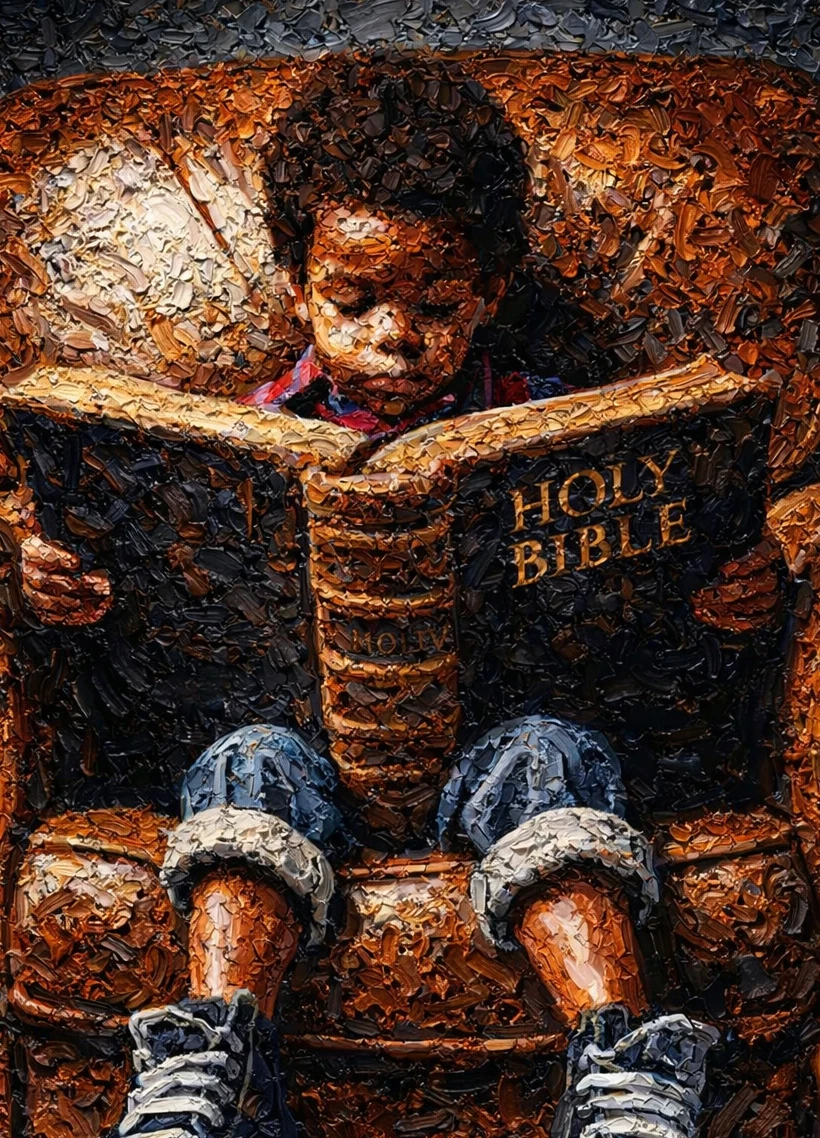
The Book That Refuses to Disappear
Few books in human history have been loved, hated, studied, banned, printed, burned, translated, and debated as much as the Bible. For thousands of years it has stood at the center of civilizations. It has inspired hospitals, universities, laws, reform movements, and missionary efforts that spanned the globe. At the same time, it has been attacked by skeptics, dismissed by critics, and mocked by those who see it as an outdated relic of the past. And yet the Bible remains.
It remains the most printed and most translated book in history. It continues to shape cultures and individual lives. Millions read it every day. Millions more wrestle with it, question it, or attempt to disprove it. Why? Because the Bible does something few other books dare to do. It claims to be true. Not merely inspiring. Not merely helpful. Not merely historically interesting. But true.
It claims to reveal who God is, why the world exists, why humanity struggles with evil, and how reconciliation with God is possible. It claims that history itself moves toward a final fulfillment planned by God.
These are enormous claims. And enormous claims demand serious examination. The purpose of this is to explore one central question: Why should we believe the Bible? Not sentimentally. Not blindly. But thoughtfully.
Christian faith is not built on wishful thinking. It is rooted in events, documents, witnesses, and experiences that can be investigated. The Bible invites examination rather than fearing it. Jesus Himself said: “You will know the truth, and the truth will set you free.” — John 8:32
Truth has nothing to hide. So the question before us is not merely whether the Bible is meaningful. Many books are meaningful. The real question is whether the Bible is reliable revelation. If it is, it deserves our trust. If it is not, it deserves our rejection. There is no middle ground.
The Human Search for Truth
Human beings are truth-seeking creatures. We want to understand the world. We want to understand ourselves. We want to know why life exists and whether it has meaning. Philosophers call these questions ultimate questions: Why are we here? What is right and wrong? What happens after death? Is there a God?
Every worldview attempts to answer them. Some say the universe is accidental. Others believe the universe is divine. Some believe humanity is inherently good, while others believe humanity is deeply flawed. The Bible presents a worldview that addresses all of these questions in a coherent narrative.
According to Scripture, the world is not accidental. It was created by a personal God. Humanity was made in God’s image but has fallen into sin. History unfolds under God’s sovereignty and moves toward redemption. This narrative explains both the beauty and the brokenness of human existence. We see extraordinary acts of compassion and courage. But we also see cruelty, injustice, greed, and violence. Why do both exist?
The Bible answers with a concept called the Fall. Human beings were created good but rebelled against God. That rebellion introduced sin into the world, fracturing our relationship with God, with each other, and with creation itself.
The Bible’s explanation of human nature is remarkably realistic. It acknowledges our capacity for greatness and our tendency toward selfishness. Other worldviews struggle to explain this tension. But the biblical worldview accounts for it. Yet the question remains: Is the Bible trustworthy enough to base our understanding of reality upon it? To answer that question, we must examine its foundations.
A Book Unlike Any Other
The Bible is not a single book in the ordinary sense. It is a collection of sixty-six books written over approximately 1,500 years, with over 40 writers. Its authors came from vastly different backgrounds: Shepherds, Kings, Fishermen, Prophets, Scholars, Government officials, and Physicians. They lived in different centuries and wrote in different cultural contexts. Some wrote during times of peace. Others wrote during exile or persecution. They wrote in three languages: Hebrew, Aramaic, and Greek. They wrote on three continents: Asia, Africa, and Europe.
Ordinarily, a collection of writings produced under such diverse circumstances would be chaotic and contradictory. But the Bible is remarkably unified. From the opening chapters of Genesis to the closing vision of Revelation, it tells a coherent story.
The story begins with creation. God creates a good world and places humanity within it as His image bearers. But humanity rebels against God, introducing sin and death into the world.
From that moment forward, the rest of the Bible unfolds the story of God’s plan to restore what was broken. This plan culminates in Jesus Christ.
The Old Testament anticipates Him. The New Testament reveals Him. This unity across centuries is extraordinary. It suggests that behind the human authors stands a single divine Author guiding the story.
Rooted in History
Unlike many religious texts, the Bible anchors its message in historical events. It speaks of specific places and rulers. It references empires, battles, migrations, and political systems.
For example, the Gospel of Luke situates the ministry of John the Baptist in a precise historical setting: “In the fifteenth year of the reign of Tiberius Caesar… when Pontius Pilate was governor of Judea…” — Luke 3:1
These names are not mythical. They appear in Roman records and archaeological discoveries. The crucifixion of Jesus occurred under the Roman governor Pontius Pilate. This fact is confirmed by Roman historian Tacitus and Jewish historian Josephus.
Christianity did not arise centuries later through legend. It emerged in the very region where Jesus lived and died. Eyewitnesses were still alive when the New Testament documents circulated. If the accounts were false, they could have been challenged immediately. Instead, Christianity spread rapidly despite intense opposition.
The early Christians were not proclaiming abstract philosophy. They were proclaiming an event: Jesus of Nazareth had risen from the dead. That claim would change the course of history.
The Reliability of the Text
One common objection to the Bible is that it has been copied so many times that its original message must have been corrupted. However, the manuscript evidence tells a different story.
The New Testament is the best-attested ancient document in history. There are thousands of ancient manuscripts of the New Testament. By comparison, most ancient works survive in only a handful of copies written centuries after the original. Yet historians consider those works reliable.
The New Testament manuscripts allow scholars to reconstruct the original text with remarkable accuracy. Even when textual variations occur, they are usually minor spelling differences or word order changes.
No central Christian doctrine depends on disputed passages. Furthermore, the discovery of the Dead Sea Scrolls in 1947 provided powerful confirmation of the Old Testament’s preservation. These scrolls include copies of biblical books dating over two thousand years ago.
When compared with later manuscripts, they show remarkable consistency. This demonstrates that the biblical text was transmitted with extraordinary care.
Archaeology and Scripture
Archaeology cannot prove every event in the Bible. But it can confirm the historical framework in which those events occurred. Again and again, archaeological discoveries have supported biblical details.
For years, skeptics doubted the existence of the Hittite civilization mentioned in the Old Testament. Archaeologists later uncovered the ruins of the Hittite empire.
The Pool of Bethesda described in the Gospel of John was once considered fictional. Excavations in Jerusalem revealed it exactly as described.
The Tel Dan inscription references the “House of David,” confirming the historical existence of King David.
These discoveries demonstrate that the Bible accurately reflects the historical and cultural world in which it was written. Far from undermining Scripture, archaeology has repeatedly strengthened its credibility.
The Evidence of Prophecy
One of the most striking features of the Bible is prophecy. The Old Testament contains hundreds of predictions concerning a coming Messiah. These prophecies were written centuries before the birth of Jesus. They include details such as: The Messiah would be born in Bethlehem. He would be rejected by His own people. He would suffer and die for the sins of others. He would be buried in a rich man’s tomb. He would rise again.
Isaiah 53, written around 700 years before Christ, describes a suffering servant who bears the sins of humanity.
Psalm 22 describes crucifixion imagery centuries before crucifixion was practiced. These texts existed long before the time of Jesus, as confirmed by the Dead Sea Scrolls.
The fulfillment of these prophecies in the life of Jesus is extraordinary. It strongly suggests that the Bible is more than human speculation. It reflects divine foresight.
The Resurrection of Jesus
The resurrection of Jesus is the central claim of Christianity. If it did not happen, the Christian faith collapses. The apostle Paul acknowledged this openly: “If Christ has not been raised, your faith is futile.” — 1 Corinthians 15:17
The historical evidence for the resurrection includes several key facts accepted by many historians:
First, Jesus was crucified and died.
Second, His tomb was discovered empty.
Third, multiple individuals and groups claimed to see Him alive afterward.
Fourth, the disciples were transformed from fearful followers into bold witnesses willing to die for their testimony.
The resurrection explains these facts better than alternative theories. Hallucinations do not produce empty tombs. Conspiracies do not inspire lifelong suffering and martyrdom.
The most reasonable explanation is the one the disciples proclaimed: Jesus rose from the dead. If that is true, it validates His claim to be the Son of God. And if Jesus is who He claimed to be, His view of Scripture carries ultimate authority.
The Moral Vision of the Bible
The Bible’s moral teaching is both profound and realistic. It affirms the dignity of every human being because humanity is created in the image of God. It condemns injustice, oppression, and violence. It calls for humility, generosity, forgiveness, and love.
Jesus summarized the moral law in two commandments: Love God. Love your neighbor. These principles have shaped much of Western moral thought. But the Bible also recognizes the reality of human sin. It explains why even our best intentions are often corrupted by selfish motives.
The biblical diagnosis of the human condition is remarkably accurate. We are capable of both great good and terrible evil. The Bible explains why. And it offers a solution.
The Transforming Power of Scripture
Throughout history, the Bible has transformed countless lives. Individuals who encountered its message have experienced profound change. Addicts have found freedom. Violent people have become peacemakers. Broken relationships have been restored. This transformation is not limited to one culture or generation. It occurs wherever the message of Scripture is embraced. The Bible does not merely inform the mind. It reshapes the heart.
The Inner Witness of the Spirit
Christians believe that the Holy Spirit plays a role in confirming the truth of Scripture. Jesus promised His followers: “When the Spirit of truth comes, he will guide you into all truth.” — John 16:13
This does not replace historical evidence. Rather, it complements it. The same Spirit who inspired Scripture helps readers recognize its truth. Faith is therefore both rational and relational. It involves the mind and the heart.
The Cost of Ignoring Scripture
If the Bible is true, its message cannot be ignored. The Bible teaches that humanity is separated from God by sin. But it also proclaims that God has provided reconciliation through Jesus Christ. This message carries eternal significance. To reject it is to reject the offer of restoration with God.
The Word That Stands Forever
The Bible has endured centuries of criticism and opposition. Yet it continues to shape lives and cultures. Its historical credibility, prophetic accuracy, moral depth, and transformative power all point toward a remarkable conclusion.
The Bible is not merely a human book. It is the Word of God. Isaiah declared: “The grass withers, the flower fades, but the word of our God will stand forever.” — Isaiah 40:8
Empires rise and fall. Philosophies come and go. But the Word endures. And those who trust it discover that its message leads not merely to knowledge—but to life.