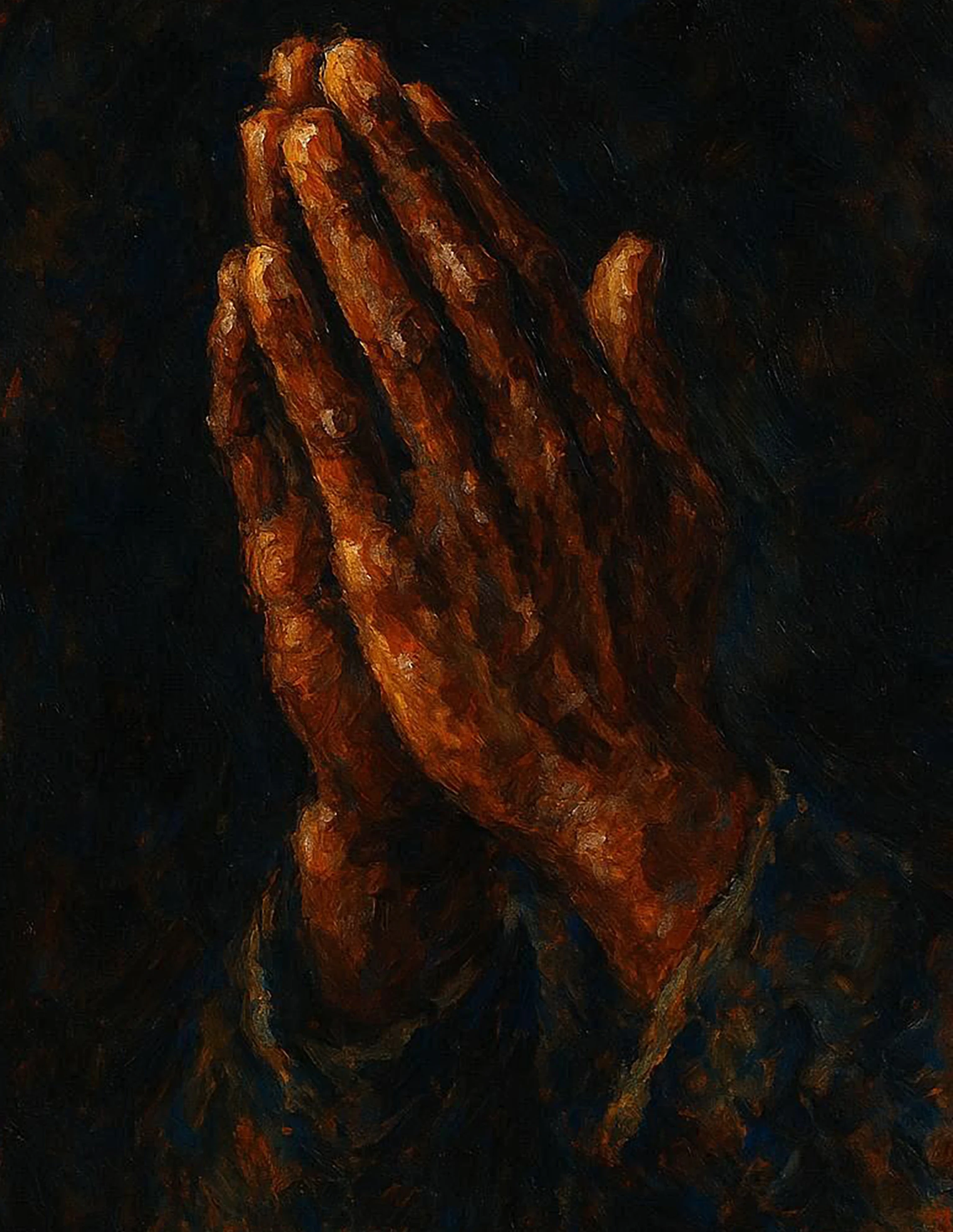
Prayer is one of the most intimate and powerful ways we connect with God. Yet for many people, it can feel confusing, repetitive, or even intimidating. What do we say? How do we begin? Are we doing it “right”?
Thankfully, Jesus Himself answered these questions. In Matthew 6:9–13, He gave us what is commonly known as The Lord’s Prayer—not just as words to repeat, but as a model to follow. Within these few verses is a complete framework for meaningful, effective, and heartfelt prayer.
This post will walk through each part of the Lord’s Prayer, unpacking its meaning and showing how you can apply it to your own prayer life in a real, practical way.
The Lord’s Prayer (Matthew 6:9–13, KJV)
“Our Father which art in heaven, Hallowed be thy name. Thy kingdom come, Thy will be done in earth, as it is in heaven. Give us this day our daily bread. And forgive us our debts, as we forgive our debtors. And lead us not into temptation, but deliver us from evil: For thine is the kingdom, and the power, and the glory, for ever. Amen.”
“Our Father which art in heaven” — Start with Relationship
Prayer begins with relationship, not ritual.
Jesus didn’t say, “O distant Creator” or “Almighty Judge” (though God is those things). He said, “Our Father.” This is deeply personal. It establishes that prayer is not about performance—it’s about connection.
What This Means
Calling God “Father” reminds us of three important truths:
Access — You are invited into His presence “For through him we both have access by one Spirit unto the Father.” (Ephesians 2:18)
Intimacy — He knows you and cares about you “Like as a father pitieth his children, so the Lord pitieth them that fear him.” (Psalm 103:13)
Belonging — You are not alone “Behold, what manner of love the Father hath bestowed upon us…” (1 John 3:1)
How to Apply This in Prayer
Start your prayer by acknowledging who God is to you personally:
“Father, I come to You today…”
“Lord, thank You that I can call You my Father…”
Don’t rush past this. Let it settle in your heart. You are not talking into the air—you are speaking to a loving Father.
“Hallowed be Thy name” — Worship and Honor God
Before asking for anything, Jesus teaches us to worship.
The word “hallowed” means holy, sacred, set apart. This part of the prayer is about recognizing God’s greatness and giving Him reverence.
What This Means
Worship aligns your heart with God’s truth:
It shifts your focus from problems to His power
It reminds you of His character
It builds faith before you even make requests
“Enter into his gates with thanksgiving, and into his courts with praise.” (Psalm 100:4)
How to Apply This in Prayer
Spend time praising God for who He is:
“You are holy, Lord.”
“You are faithful, even when I am not.”
“You are my provider, my peace, my strength.”
You can also use Scripture in worship:
“Great is the Lord, and greatly to be praised.” (Psalm 145:3)
Worship is not filler—it is foundation.
“Thy kingdom come, Thy will be done” — Surrender to God’s Will
Prayer is not about getting God to do your will—it’s about aligning yourself with His.
This part of the prayer is a declaration of surrender.
What This Means
When you pray for God’s kingdom and will:
You are inviting His authority into your life
You are trusting His plan over your own
You are acknowledging that He knows best
“Trust in the Lord with all thine heart… and he shall direct thy paths.” (Proverbs 3:5–6)
Jesus modeled this perfectly:
“Not my will, but thine, be done.” (Luke 22:42)
How to Apply This in Prayer
This can be one of the hardest parts of prayer—but also the most powerful.
“Lord, let Your will be done in my life today.”
“Help me to follow Your plan, even when I don’t understand it.”
“Use me for Your purposes.” Surrender doesn’t mean passivity—it means trust.
“Give us this day our daily bread” — Depend on God Daily
Now we come to requests—but notice how simple they are: daily bread.
Jesus teaches us to depend on God one day at a time.
What This Means
“Daily bread” represents:
Physical needs (food, shelter, health)
Emotional needs (peace, strength, comfort)
Spiritual needs (guidance, wisdom, growth)
“But my God shall supply all your need according to his riches in glory…” (Philippians 4:19)
How to Apply This in Prayer
Bring your needs honestly before God:
“Lord, I need Your help today…”
“Give me strength to get through this situation.”
“Provide what I need for this day.”
Also notice the word “us”—this reminds us to pray not just for ourselves, but for others.
“Forgive us our debts” — Confess and Receive Forgiveness
Sin creates distance in our relationship with God—but confession restores it.
This part of the prayer calls us to humility and honesty.
What This Means
“Debts” refers to sin—anything that separates us from God.
“If we confess our sins, he is faithful and just to forgive us…” (1 John 1:9)
Confession is not about shame—it’s about freedom.
How to Apply This in Prayer
Take time to reflect and confess:
“Lord, forgive me for…”
“I repent of my attitude/actions today…”
“Cleanse my heart.”
Don’t rush through this. Let God search your heart:
“Search me, O God, and know my heart…” (Psalm 139:23)
“As we forgive our debtors” — Extend Forgiveness to Others
This is one of the most challenging parts of prayer.
Jesus directly connects receiving forgiveness with giving it.
“For if ye forgive men their trespasses, your heavenly Father will also forgive you.” (Matthew 6:14)
What This Means
Forgiveness:
Releases bitterness
Restores peace
Reflects God’s mercy in your life
It doesn’t mean what happened was okay—it means you are choosing freedom over resentment.
How to Apply This in Prayer
Be honest with God:
“Lord, I’m struggling to forgive… help me.”
“I release this person to You.”
“Heal my heart where I’ve been hurt.”
Forgiveness is often a process—pray through it regularly.
“Lead us not into temptation, but deliver us from evil” — Seek Protection and Strength
Life is full of spiritual battles, and Jesus teaches us to pray for protection.
What This Means
This part of the prayer acknowledges:
Our human weakness
The reality of temptation
Our need for God’s help
“Watch and pray, that ye enter not into temptation…” (Matthew 26:41)
God doesn’t lead us into sin, but He does guide us away from it.
How to Apply This in Prayer Ask for strength and discernment:
“Lord, help me resist temptation today.”
“Guard my thoughts and actions.”
“Protect me from anything that would pull me away from You.”
Also pray for spiritual awareness:
“Put on the whole armour of God…” (Ephesians 6:11)
“For Thine is the kingdom, and the power, and the glory” — End with Praise and Trust
Just as prayer begins with worship, it ends with it.
This final statement is a declaration of God’s authority and sovereignty.
What This Means
You are reminding yourself that:
God is in control
God has the power
God deserves the glory
“Yours, Lord, is the greatness and the power and the glory…” (1 Chronicles 29:11)
How to Apply This in Prayer
Close your prayer with confidence:
“Lord, I trust You.”
“You are in control of everything.”
“All glory belongs to You.”
This ending shifts your mindset from worry to faith.
Putting It All Together: A Practical Prayer Flow
Here’s how you can structure your prayer using this model:
Relationship — “Father…”
Worship — Praise His name
Surrender — “Your will be done”
Provision — Ask for daily needs
Confession — Admit sins
Forgiveness — Release others
Protection — Ask for guidance and strength
Praise — End with trust and glory
A Sample Prayer Using This Model
“Father, I come before You today, grateful that I can call You my Father. You are holy, powerful, and worthy of all praise. Let Your will be done in my life—guide my steps and align my heart with Your purpose.
Provide for my needs today—give me strength, wisdom, and peace. Forgive me for where I’ve fallen short, and cleanse my heart. Help me to forgive those who have hurt me, even when it’s difficult.
Lead me away from temptation, and protect me from anything that would pull me away from You. I trust You, Lord. Your kingdom, power, and glory are forever. Amen.”
Final Thoughts: Prayer Is a Lifestyle, Not Just a Moment
Prayer is not meant to be a once-a-day ritual—it’s a continual conversation with God.
“Pray without ceasing.” (1 Thessalonians 5:17)
The Lord’s Prayer is not just something to recite—it’s a guide to living a life of connection, dependence, and trust in God.
You don’t have to use perfect words. You don’t need long speeches. What matters is your heart.
Start where you are. Speak honestly. Stay consistent.
And remember:
God is always listening.